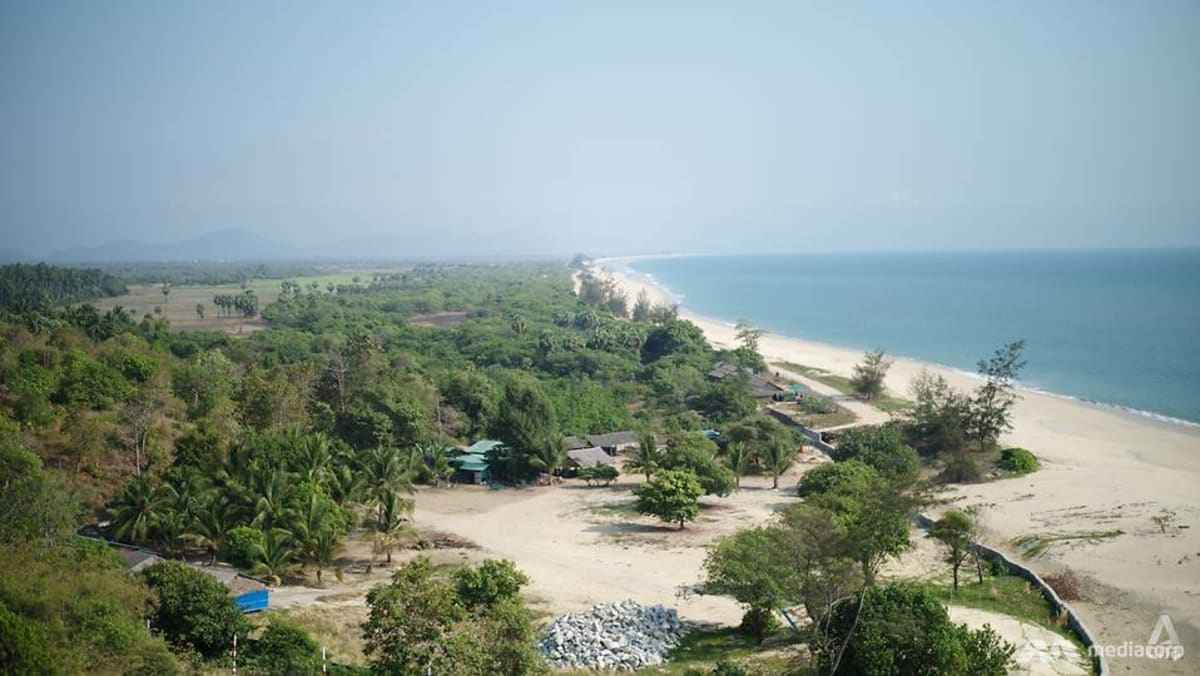
Myanmar is attempting to revive its Dawei port project, which has been stalled for years, with the support of Russia. The project aims to create a deep-sea port that could offer a regional shipping shortcut by bypassing the Strait of Malacca. This would potentially speed up the movement of goods between mainland Southeast Asia and markets to the west by several days.
The Dawei special economic zone was first conceived about two decades ago as one of Southeast Asia's great new gateways. However, the project faced significant challenges, including financing constraints and disagreements between the parties involved. In 2020, a development concession held by a Thai-led private consortium was terminated due to these issues.
Despite these setbacks, Myanmar is now formally trying to restart the project with Russia's involvement. In July, it was announced that work to set the geographical boundaries of the port was in its final stages, less than 18 months after Moscow and Naypyidaw signed an investment cooperation framework covering Dawei. Russian involvement has since expanded into proposals for a deep-water port, 660 MW power plant, oil refinery, and other heavy industry.
Thailand is also showing renewed interest in the project, with Deputy Prime Minister Anutin Charnvirakul stating that both countries are ready for a new chapter in economic cooperation. According to Anutin, this cooperation will be based on trust, confidence, and mutual benefit for the people of both nations. The revival of the Dawei port project comes as Myanmar faces increasing international isolation following the 2021 coup and outbreak of civil war.
Russia has grown to become a useful ally for Myanmar during this period, according to Ian Storey, principal fellow at the ISEAS-Yusof Ishak Institute in Singapore. The project's potential to transform regional trade routes is significant, with planners envisioning a connection between production centers in mainland Southeast Asia and the Indian Ocean. This could potentially speed up the movement of goods and reduce reliance on the Strait of Malacca.
However, despite the renewed interest and support, there are still doubts about the project's viability. Financing constraints and infrastructure requirements remain significant challenges, and the project's success will depend on overcoming these hurdles. As the project moves forward, it will be crucial to address these concerns and ensure that the Dawei port project is viable and beneficial for all parties involved.
With Russia's support and Thailand's renewed interest, the project may finally gain momentum and transform regional trade routes. The Dawei special economic zone has the potential to become a major shipping hub, offering a regional shipping shortcut and transforming the way goods are transported between mainland Southeast Asia and markets to the west. As the project progresses, it will be essential to monitor its development and assess its impact on regional trade routes.